I am so consumed by a mental loop of HOUSE HOUSE HOUSE HOUSE HOUSE HOUSE you would not even know that there are other elements to my life. I am looking forward to this part being over and the next part being well under way. There is no way to get to the next part without doing this part.
Today’s plan was watch episodes of The West Wing while playing the three (3) versions of Candy Crush I have on my phone, and pack two boxes between each episode. This should have resulted in a 2/1 ratio of boxes to episodes. Would you like to guess what the actual ratio is? In my partial defense, I allowed one substitution: making a scary phone call instead of packing two boxes. Counting the call as two boxes, I am at a ratio of 2/3, which makes me glad I converted the call into boxes before telling you.
What is my problem? What IS my problem?? I am stressed about packing and about all the packing that still needs to be done! Doing some packing would help with that! Also my hands and feet are freezing and the best way to fix that is to move around a little, maybe lift something heavy like a box. Instead I watched a third episode of West Wing and then walked across the house and sat down at my computer.
It’s discouraging how MANY boxes it takes. I packed the bedding and I used the largest boxes and it took three of those large boxes and I haven’t yet even packed all the bedding. Why do we have so much bedding? Are we USING all this bedding? Maybe I should open those boxes back up and get rid of more of the bedding.
I can’t even tell how much progress I’m making. The box pile is certainly getting large. But the house looks discouragingly the same. Am I a tenth of the way done? A hundredth? WHO CAN TELL.
I find I am no longer particularly stressed about the idea of living in a different house, or the idea of giving up this house. I can still get myself worked up about either thing if I try, but I can’t sustain it. I’m looking forward to living in the new house. I don’t need anymore the fiction that we will hang onto this house in case we want to move back. But I am not looking forward to all the calls and strangers involved in a new house.
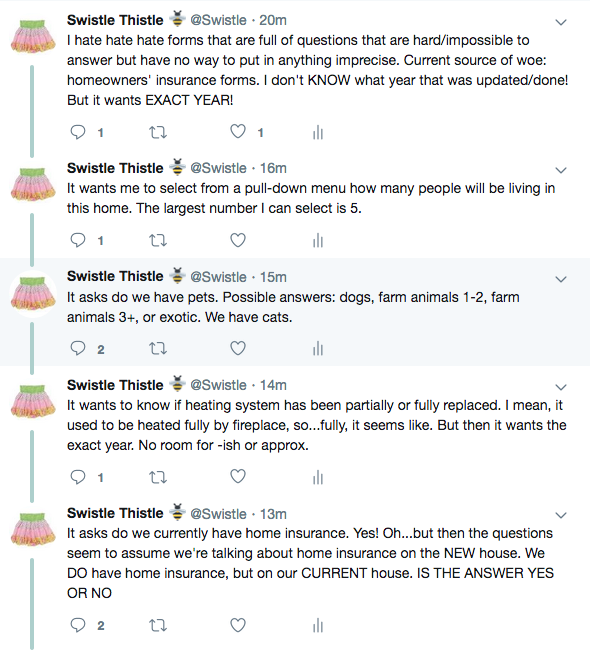
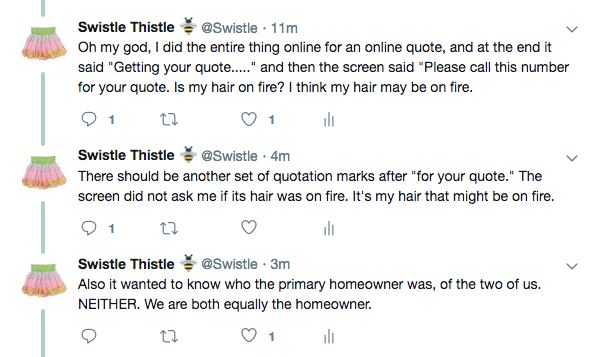
One of my least favorite parts is not knowing who to call for what. Like, just for an example, the home inspector said that there is a place where a plumber removed too much of a support beam in order to make room for a pipe, and that situation needs to be remedied. Who do I call for that? What verb is it I’m even asking them for, other than “to remedy”? How do I figure out what kind of worker to hire when I don’t even know what kind of work needs to be done? Is there someone I could call and just hand them the inspection report and have them take care of it all without me having to make a whole bunch of calls? And if not, WHY NOT?? This seems like an opportunity just waving itself around in the air! “Hand me the inspection report and I will take care of it.” Or maybe there already are such people, but they are called contractors and they cost the same as buying an additional house, and that is why I am not hearing so much about them as the obvious answer to this problem. WHY ARE WE EVEN BUYING A HOUSE, WHAT A STUPID IDEA TO OWN A HOUSE.
Basically that is where I have put my stress about moving: into freaking out about fixing problems that have evidently been coasting along just fine for a couple of decades. I did search online for “handyman” with our city name, and I have found someone in a larger city about 40 minutes away who not only does general handyman work of a “no task too small” variety but also helps with moves and furniture assembly. So probably I have already solved my own problem and can get back to watching episodes of The West Wing now.