Interruptions; Responding to Facebooks Statuses; Moderating Comments Sections

This morning I was trying to proofread my Milk & Cookies post (I’m giving ideas and also looking for more ideas for birthday party gift ideas for a 10-year-old girl) (the site format is a little wonky right now—it doesn’t usually look all smashed together like that), and the children were being interruptive as usual. I have sometimes wondered if, when I’m trying to write, I over-accuse the children of interrupting: that is, maybe a full fifteen minutes went by between this interruption and the last one, but it felt to me like it was practically CONSTANT.

So today I wrote down the time of each interruption. I counted only deliberate ones: that is, if a child made a loud sound in another room and it distracted me, or if children were bickering and I interfered, or if they had a loud conversation right next to me and I couldn’t concentrate, I didn’t count those; I only counted it if a child approached me (or yelled to me from another room *clenching teeth*) to tell me something, complain about something, or ask for something. I ended up having to make tick-marks to indicate more than one interruption in the same minute:

8:46 – 3 interruptions
8:47 – 1 interruption
8:48 – 3
8:49 – 0
8:50 – 1
8:51 – 2
8:52 – 2
8:53 – 0
8:54 – 2
8:55 – 0
8:56 – 1
8:57 – 1
8:58 – 2
8:59 – 3
9:00 – 1
9:01 – 2
9:02 – 2
9:03 – 1
9:04 – 1
9:05 – 0
9:06 – 1

That’s where I stopped keeping track. In 20 minutes, there were 29 interruptions, and that’s if I did the math right—a child was trying to talk to me while I was adding them up just now.

********

I loved this post from The Brunettes Blog, about who is being spoken to when something controversial is said in a Facebook status or Twitter remark. She makes a neat point about how in person, we would know if we could politely/firmly disagree depending on context (in her example, we wouldn’t run across the room to confront a stranger at a party, but we could certainly respond to someone in our conversation group), but when someone posts something we consider objectionable on Facebook in an “of course everyone agrees with this” tone, it’s hard (and very conflicting) to know how to respond—and to feel right about not responding.

I also liked this post by Miss Zoot, especially the part about our responsibility to moderate our comments sections. A couple years back I had a post where the comments section got wayyyyy out of hand—and I had no idea what to do. Looking back on it, I could see how I could have nipped the whole thing in the bud about two comments into it—and although that would have been very difficult (because it would have involved moderating someone I considered a friend, and because I’ve had unpleasant experiences with anonymous commenters retaliating viciously when moderated), it probably would have been the right thing to do. Freedom of speech has never, ever, ever meant that we have to give people part of our own space in which to express their vicious and hurtful remarks. I try to keep that in mind now, though it can still be hard to know when/how to apply it.

But she also takes it further, discussing how such issues can help guide us in teaching our children things we didn’t have to be taught by our parents (and therefore might not realize we need to teach): we need to teach them the responsible use of anonymity; and we need to teach them the responsible management of what other people say in public spaces they control, such as their Facebook pages.

The Giant Internet Hand of Spanking

Did you know that it is possible to:

  1. Feel uncomfortable in seasonal heat, and
  2. Realize that people in other professions/states/countries feel heat that is more intense or more oft-felt, and
  3. Nevertheless wish to complain/marvel about one’s own heat experience?

The Giant Internet Hand of Spanking does not know this.

Did you know that it is possible to:

  1. Have a pet/child/pregnancy, and
  2. Understand the various options for caring for that pet/child/pregnancy, and
  3. Make an informed choice for that pet’s/child’s/pregnancy’s care, and
  4. Have that choice be different than someone else’s informed choice, or
  5. Even have that choice be different than what the current mainstream opinion is, and yet
  6. Still have the choice be a truly INFORMED CHOICE, one that needs no further input from others?

The Giant Internet Hand of Spanking concedes none of this.

Did you know that it is possible to:

  1. Complain about one’s spouse, and
  2. Understand that there are worse traits the spouse could have, and
  3. Understand that people who have been painfully removed from their spouses would give anything to be able to complain about such small things, and
  4. Nevertheless wish to complain, since there are also BETTER traits the spouse could have, and since people who would like to complain about such things would ALSO be complaining about such things, if given the chance?

The Giant Internet Hand of Spanking refuses to believe you.

Did you know that it was possible to:

  1. Feel minor interest in the death/divorce of a celebrity, and
  2. Feel intense distress about a bomb in another country, and yet
  3. Only mention 1.?

Did you know that the reason for this could be:

  1. That a person feels one event is appropriate to discuss on light social media, and feels the other is not, or
  2. That a person needs more time to process one event than the other before discussing it, or
  3. That a person feels one event is easier to discuss in 140 characters, or
  4. That a person likes discussing one subject but not the other?

The Giant Internet Hand of Spanking does not know any of these things.

Did you know that it is possible to:

  1. Be very uncomfortable in the late stages of pregnancy, and
  2. Wish to complain about that discomfort, but still
  3. Fully WANT that discomfort because of what goes with it (the pregnancy, the baby, the health and maturity of the baby, etc.), and yet
  4. Still prefer not to have the discomfort itself because, clearly, it is discomfortable?

The Giant Internet Hand of Spanking does not know this, and feels you shouldn’t either.

Did you know that it is possible to:

  1. Understand how the legal system works, and
  2. Still feel upset about the outcome of a trial?

Did you know that the reason for this could be:

  1. That the person thinks it’s a rotten system that needs serious fixing, or
  2. That the person thinks the system generally works but failed in this case, or
  3. That the person thinks the system worked but wishes their side had presented the case differently, or
  4. That the person thinks the system worked the way it should have but nevertheless continues to have negative feelings about the outcome?

The Giant Internet Hand of Spanking continues to treat you with detached condescension.

Song Books For Children

My mom and I were running errands today, and she mentioned she’d had a very hard time finding singalong books to read to small children (baby/toddler/preschooler). It’s pretty easy to find ones where it’s one book devoted to one single song, but what she’s looking for is each page with its own classic children’s song, to sing one after another. She’d like these for reading (singing) to children, but also for getting the songs into her head so she has them stuck in her head when there is the sudden need to sing to a child and she is scrambling to think of a children’s song.

I bumbled around on Amazon for awhile, finding books such as the Priddy line—but some of them have no reviews or very mixed reviews, and they don’t have lists of what songs.

We looked at Target and found Nursery Rhymes (yet another from that Priddy series), and I liked it from just looking at it briefly but you can see some complaints in the reviews: evidently it uses the version of the old woman in the shoe in which she whips them all before she tucks them in. Though, even though I am not crazy about that myself, I don’t think I would have gone as far as the review-leaver, who used “shocked” to describe her reaction, and concluded that the book was “inappropriate for anyone.” How are we going to describe actual shock or inappropriateness-for-all-of-humanity, if we are going to use it about things such as this?

Where was I? I guess what I am looking for are titles of children’s song books you’ve found, the kind where there’s one song per page.

Should Tina Fey Have Another Baby?

I just finished Bossypants, and I really liked it, and I recommend it. However, I wish the reviews I’d read hadn’t been all “I PEED MYSELF MULTIPLE TIMES JUST READING THE TITLE,” because it’s a bad idea to go into ANYTHING expecting to be dead with laughter. I DID laugh, and often, but more than that I came away liking Tina Fey. Well, which I already DID from episodes of 30 Rock and from her famous impressions of Sarah P., whose name I prefer not become a search result on this site.

As I was reading, I was piling up things I wanted to tell you about the book. Some were mild whiny complaints: I wanted a big fat photo section in the middle; there was a chapter about her dad but not about her mom, and I wanted more about her mom as soon as I read that her mom made barfing sounds when she heard that a former president had personally telephoned her daughter. And there were many praises: the overall balance of show-business and personal, upbringing and current life, jokes and not-jokes; the photos sprinkled through the text; behind-the-scenes peeks; the extremely funny and also extremely touching mother’s prayer thing.

But ALL THAT got puffed right out of my head by her final chapter, which ASKED ADVICE about what she should do with her “final five minutes.” That is, she’s over 40 and she has a 5-year-old TV show: should she try for another baby (giving up the show that might not go on much longer anyway) or should she continue work on the show (giving up on another child).

Well! I would be HAPPY to give input! I would never ever have given an opinion on it unless I were asked (Ha ha! total lie. But I might not have actually titled a post as if it were a topic for general discussion, if she hadn’t asked for general discussion on the topic). My opinion is that she should have another baby. I have no idea if she’s a good mother; I have no idea if another baby will push her past her personal brink of stress. But I DO know I would like more Tiny Fey genes in the population, and I am willing to risk her sanity to get them.

Also, I think the situation she sets up (baby OR show) is not quite the way she’s agitating about it. Sometimes on the baby name blog, we get a question from someone who is losing her mind with panic: NO NAME works, not one single name! But it turns out that most of the problem is that the parents have set things up impossibly: they’re requiring that the name meet two or more incompatible standards. And the standards are totally self-imposed and unnecessary—and often unrealistic (for example, their tastes are 100% Top 50 names, but they arbitrarily insist on a name outside the Top 500).

Where was I? Oh, yes. So when Tiny Fey says that she can’t have a baby because the show would have to be canceled and 200 people who count on her would be out of work, I wonder if that is entirely the case, or if that is Panic Talk. It MIGHT be the case! It might VERY WELL be the case that if she has a baby, even if she does Worker In A Field maternity leave, the show will be canceled.

But in these dilemmas I think it can be useful to consider how things would go if her estimated absence were involuntary rather than voluntary. If, for example, she were in a car accident and were forced to spend, say, one month in heavy, three-quarters-comatose, totally-not-working-at-all-not-even-to-answer-a-quick-question recovery—would the entire show actually be CANCELED? just, on the spot? She’s the most crucial member on the entire thing, but would they be literally unable to find a way to coast for a month? My guess is no, they could find a way. I don’t know what that way would be, because I have zero experience with that industry, but…timing it for a part of the year they’re not working so much, if such a part exists? making shows ahead? skipping a couple of shows and doing re-runs those weeks with an awwwww-inspiring photo of the newborn reason for it? having a few famous guest directors/writers and making a big deal of it like it’s fun to see how someone else would run things, which it in fact would be? doing a couple of crappy shows and just living with that because it’ll be back to normal soon? doing amusingly crappy shows where the actors keep stalling out and then saying funny things about how they can’t function without Liz and how without her they feel like they can’t even talk and don’t even know where to stand in a room? getting Amy Poehler to sub and have everyone just call her Liz and act natural about it?

And she did two movies while also doing the show. So it seems like there is some wiggle-room for doing activities in addition to her 30 Rock duties, and that it’s not “If one more thing is added, the show is gone.”

Besides, as she points out, it’s pretty rare for a show to last longer than five years. The worst-case scenario here, I think, is that she’d give up on the idea of a baby, and then the show would have one more season—ending right around the time the baby would have been born, but now the ovaries have shut up shop.

So that is my input: go with having the baby, if it is not already too late; take the Field Worker maternity leave; hire the second babysitter; make the problem of “but what about the show?” a group problem (as it would be if there had been a car accident) rather than a personal “Everyone is counting on me” problem. This is a pretty smart group of people she’s working with, and my guess is that they have solved many problems well together on other occasions.

UNLESS: deep down she doesn’t really want another baby, but needs a solid reason in order to (1) put her mind at rest and (2) get everyone off her back about it. In which case, I say don’t have another baby, because if she did, the entire television show would have to be canceled, and none of those 200 people would ever find work in the industry again. Maybe this hypothetical second baby wouldn’t have children anyway, removing the issue about genes lasting longer than a television show: perhaps he/she will ALSO be too crucial to a television show to take time off to have children. It’s important for the good of the many (the aforementioned 200, plus TV viewers) to outweigh the good of the few (Tiny Fey, her family, and those positively affected by the genes later on), and this resolves the dilemma.

Sapphires and Rubies; Uncredited Ghostwriters; Diet Tricks of the Future

It troubles my mind that sapphires and rubies are different colors of the same gem. “Pink sapphires” could just as well be called pink rubies—and why aren’t they? It makes more sense. We don’t call the light blue stones “blue rubies.”

********

So, when you have people who put out autobiographies when you’re PRETTY SURE they’re personally unable to successfully clack two words together, but then there’s no “as told to” or other credit—I guess this means there is such a thing as a totally on purpose uncredited writer. In fact (*two neurons clacking together*), I guess that’s what “ghostwriter” MEANS. That seems like it might be kind of…unsatisfying, as jobs go.

It shouldn’t surprise me that such a job exists: manuals don’t usually have authors on them, and yet we know someone wrote them. Advertising copy doesn’t have an author’s name on it, either. But…in those cases, we know someone wrote it, but we don’t know WHO. In the case of a celebrity autobiographer, we know someone wrote it, and the celebrity takes the credit—and no doubt goes around claiming to be a published author.

********

Dieting tricks I keep expecting to see developed for mass use:

1. Temporary taste-bud numbing

2. More stuff like that berry that makes everything taste sweet

3. Something that messes with the thing that makes us feel hungry

4. Parasites

No One Does Nothing; Harley Dunner; Cheerful Helpy Citizens

The children are in the kind of mood where they think it’s worthwhile to have the argument that another child can’t claim to be doing “nothing” when that child is in fact breathing, and also their heart is beating, and also their hair is growing, and also they’re blinking, so obviously they must be a TOTAL IDIOT to claim to be doing nothing. I’d been sipping a diet Coke, and I added a slug of vodka to it. Just slugged it RIGHT IN.

********

This might be the only time in my life I see this, so I am making note. First, you have to imagine a woman in her late 60s, with sensible glasses and a conservative grey haircut of the sort I would have called a “mom haircut” except that since it’s usually OUR moms we mean, I suppose it’s actually a “grandma haircut.” (But not OUR grandmas. Unless your grandma is in her late 60s. You know, maybe referring to things with labels that apply to more than one generation is too confusing.) Picture her wearing an Alfred Dunner set: elastic-waist wrinkle-free pastel trousers with coordinated short-sleeved seersucker button-down collared shirt with a subtle pastel stripe that includes the same pastel of the trousers.

Got her in your mind? Now imagine her on a tough-looking motorcycle. Not wearing a helmet. Cruising along. Chin held level. Nothing in her face to show she admits this is out of the ordinary.

********

Is your Nice Things We Do For Other People list a little SPARSE? Perhaps they asked you not to donate blood again after you fainted six times in a row, and the place you’d like to volunteer isn’t something you can do while the children are still small, and things are a little tight for donating money right now, and so on? I have AN IDEA. And what makes this a Great Idea is that it is (1) something that takes almost zero effort, which is nice if you are feeling like if ONE more person asks you for ONE more thing you are going to rip off your clothes and go shrieking down the railroad tracks, but (2) genuinely helpful in its own modest way, and (3) you might be doing it ALREADY for other reasons, but now you can feel Cheerful Community Member about it.

The idea is: bring in a cart with you from the parking lot. Take it from the corral, or better yet get one that someone left in/near a parking space. You need a cart anyway, and this means your Net Cart Effect is zero or better (you take one in with you; you take it back out and leave it properly in the corral) rather than -1 (you walk in; you take a cart out with you; somebody has to go out in the nasty heat/slush and get that cart and bring it back into the store). (Speaking of which: this idea doesn’t work in circumstances when all the outside carts are scorching hot or covered in snow/ice or dripping with rain. Yick.)

Plus, it’s handy to get the cart early: you can put your purse and/or reusable bags and/or small children in it at the earliest possible moment (these are the reasons you might already have been participating, without realizing you were being a Cheerful Helpy Citizen), and you don’t have to get in the way and/or wait for people to get out of your way at the in-store cart area. Plus, as my mom points out, a cart that has been used for an entire shopping trip is less likely to be a bum cart. [Clarification: by “bum cart,” I mean one that squeaks or has stiff wheels or has a wheel that pulls to one side so you’re constantly fighting it.]

Tattoo Considerations and Stories

So! Since high school, I have been considering Getting A Tattoo. The problem with this is that I remember clearly the tattoo I would have gotten if I’d gotten one in high school: a Winnie the Pooh. On my ankle. I KNOW. I’d recently won a speech contest by doing a Winnie the Pooh story monologue, and it would have been Classic Pooh rather than Disney Pooh, but whatever.

This has made me very, very uncertain about EVER getting a tattoo, because that was ME at 16, and so perhaps “Me at 50” will be looking back at “Me in My Mid-Thirties” and thinking “OMG, Winnie the Pooh would have been WAY BETTER.”

Here are the things I think are important:

1. It has to be something I will identify with FOR THE REST OF MY LIFE. Winnie the Pooh = no. My children = yes. Paul = not necessarily. (If he were to cheat on me and then leave me for someone else, I would not be happy to have him permanently on my skin.)

2. It needs to be in that Perfect Location of hideable + showable. That is, I need to be able to easily hide it if I want to, and I’d like to be able to fairly easily show it if I want to—even to a casual acquaintance who has not plied me with drinks. Upper arm? Shoulder blade? Ankle? I’ve heard ankles are Very Owie.

What I’m currently considering is a fox. (My current favorite is here: fox saying “WHAT.”) We found out awhile back that my family-of-origin surname is fox-based, and ever since then I’ve found I have an increased affection for fox-related merchandise. Plus, foxes are cute. I’m thinking of this for the upper arm.

Second possibility: children’s names and birthdates. But perhaps you have noticed that I have a lot of children. That is a lot of real estate to consider, location-wise. And there is the font to endlessly dither over consider. So I think that would be a nice SECOND tattoo, probably shoulder-blade area. Except then I can’t see it. But I’m not sure where else to put it. Make them small and put them on the OTHER upper arm, maybe.

And then there is the TIMING to think of. It would be pleasing to get it for a Milestone Birthday, but I’m too far from both 35 and 40. And I can’t think of any other milestones. So then…a random Tuesday?

What I think I like BEST about tattoos is tattoo STORIES. So if you have a tattoo, would you be willing to tell me any of the following things:

  • what it is
  • how/why you chose it
  • where it is
  • how/why you chose the location
  • whether there was any significance to the timing
  • how long it’s been since you got it and how you feel about it now
  • what you’re glad you considered
  • what you wish you’d considered

And could you also try to tell me how much it hurt? and whether I’d be allowed to bring a flask?

Links Links Links, Whatever!

From Miss Grace, an illustrated guide of bra theory vs. bra reality. Funny AND funny AND true.

Sam is asking for advice: should you tell someone else’s child about sex? should you help that child access birth control? It’s a very thought-provoking topic—as you can see from my multi-paragraph comment on that post. I COULD NOT STOP.

My cousin Lee brought Tonight, Tonight to my attention:

Now whenever anything happens I’m tempted to obsess about, I sing “La la la, whatever! La la la, it doesn’t matter!” Listen to just the first 30 seconds so you have the tune in your head if I want to sing it in a post.

Rob Lowe and Switch

Look what I’m reading:
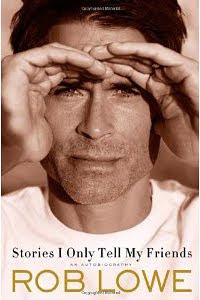
Oh yes I am.
(photo from Amazon.com)

I kind of love celebrity autobiographies, but I also FEAR them because they can completely kill an excellent crush: “OMG! He’s vapid, and arrogant, and oblivious, and also DUMB AS A CHICKEN!” I got Stories I Only Tell My Friends only after reading review after review after review that said it was the perfect celebrity autobiography: a nice amount of dish, a nice amount of name dropping, and it didn’t destroy their impression of Rob Lowe.

It helps that I didn’t go into it with any particular impression about Rob Lowe (except that apparently I’ve been confusing him with Robert Downey Jr. for DECADES). When many of my friends had photos of him stuck in the rim of a mirror, I hadn’t yet been allowed to watch anything he’d been in. Also, my tastes in boys ran towards Michael J. Fox and Kirk Cameron: BOY boys. Guys like Rob Lowe seemed more like MEN boys. Too much STUBBLED JAW to be the kind of Non-Threatening Boy ( <--reference from The Simpsons) I liked. So I went into it with no particular feelings about Rob Lowe either way. I’m halfway through the book, and so far it’s as-promised. There is the occasional (maybe even frequent) eye-rolling moment over a director described as having the insight/intelligence to cast him, or over a movie that would have been so amazing if his role hadn’t been cut out, or the comment about how it USED to be about Quality Acting but now it isn’t, or how some Amazing Legend gave him a compliment—but I EXPECT (maybe even WANT) that from a movie star. It doesn’t get overdone—which means I keep thinking to myself, after the eye roll, “Well, who knows? He might be RIGHT.” Though I also keep adding to myself “(But I don’t think he realizes he could be wrong. And we can’t tell him so, because it would be a hurtful thing to point out.)” There’s TONS of “And that blonde girl from New Jersey was….[huge name drop].” Again, it’s a little silly but it’s what I EXPECT (and possibly WANT). It demonstrates to me the way many of those anecdotes happened before he or we would have recognized those names—so we get more of a feel of how it WAS: first he met the sweet girl named Sarah Parker, and LATER he looks back on it and thinks “Whoa, that was SARAH JESSICA PARKER OMG.” There are too many claims to high-school-era nerdiness for someone who had gorgeous girls repeatedly offering him sex during that time (BEFORE he got famous). We DO thank kids who had successful high school experiences for not ALSO wanting to belong to the Unpopular Club. Leave us the little we cling to, kthanx. There’s a surprisingly low amount of Parental Blame and a surprisingly high amount of Parental Understanding (but not SO high that it made me think “ghost writer working on improving PR”), causing me to wonder how one person can relentlessly and scathingly blame a parent for, for example, serving dessert every night after dinner, while another person can go through parental divorce and parental mental illness and still come out of it saying, “You know, everybody’s got stuff.” It made me like Rob Lowe better. There are plenty of moments when I think he reveals something other than what he intends to reveal—about his personality or about the situation he’s describing. This makes me feel clever and also tapped in to human nature. I also enjoy the overall feeling I got from reading it, which is similar to how I felt after hearing Britney Spears’s Piece of Me: a renewed appreciation for the idea that being a rich celebrity is a weird and confusing life and has some downsides—and that just because someone has something a lot of people want, that doesn’t mean they don’t also have a lot of stuff people WOULDN’T want.

And there are PHOTOS. Really, I think EVERY celebrity book would benefit from quadrupling the number of photos in the middle. I keep flipping back to them again and again and again.

But keep in mind I am only halfway through it.

The book I read BEFORE the Rob Lowe book was Switch: How to Change When Change is Hard:

(photo from Amazon.com)

I read it because Tess read it, so I recommend starting with what she wrote about it, because not only does she explain the concepts well enough for you to know if you’d be interested in reading the book or not, but also it’s a really funny anecdote.

I found parts of the book SUPER ANNOYING, because I felt like when there was a choice between the “motivational speaker” route and the “scientific method” route, the authors went straight for motivational speaker EVERY SINGLE TIME. They’d say, “Well, in THIS case, it’s THIS, but in THAT case, it’s THAT,” and I’d think, “Actually, the only difference between those two situations is the SPIN you put on it. I could re-spin it to make them sound identical.” Or they’d talk about how one of their ideas made a HUGE DIFFERENCE in a situation, and I’d feel the way I do with those “lost half their size” articles, where I think, “Follow-up a year later, please.” And in general I felt like they went out looking for situations where their idea seemed to have been The Fixing Idea, without seeing if they could find counter-examples (either where their ideas failed, or where something worked that opposed their ideas).

NEVERTHELESS, I thought the book was extremely useful, and I would highly recommend it, and I would continue to use a strong adverb in front of each verb as I did so. It’s just that when you’re reading it, I don’t want you to think I didn’t notice those problems.

I had several favorite parts:

1. The part about finding where the PROBLEM is. Like, instead of spinning in circles about something that’s NOT WORKING, see if I can find what’s keeping it from working. I realize this sounds SO OBVIOUS, but I think it’s one of those concepts that, for me, I have to actively work on remembering—or else I automatically get discouraged and give up. I find I’ve applied this about a million times in the week since reading the book: instead of getting frustrated and giving up, I think, “Well, what is the PROBLEM? Why ISN’T it working?”

2. The part about small steps (cleverly referred to as “inchpebbles”—like, instead of “milestones”). I already know this, but again, it’s good to have a refresher course because it’s SO HARD TO REMEMBER IT AND APPLY IT. And I’m using it in combination with #1—thinking to myself, “Why am I not hanging up this picture, when I want to and it’s so easy?” and then thinking, “Well, could I bring the hammer up from the basement the next time I come upstairs?”

3. The concept of TBU (True But Useless), which I hadn’t heard before as a Thing. I’ve used it several times per day since then. I’ll be spinning on something, and then I’ll think, “That IS TRUE. But it is USELESS for the purposes of this problem.” YES, I bought something and then it went on clearance, and that’s upsetting. TBU. YES, it’s irritating that this mess is here. TBU. YES, it’s true that I shouldn’t have to be handling something. TBU. YES, that person shouldn’t have said that. TBU.

4. The question we’re supposed to ask ourselves: if this problem were magically fixed while we were sleeping, what would be our first clue that it had been fixed?

5. Tess reminded me in the comments section of the “bright spots” concept, where instead of running around trying to make things work that aren’t working, you look at where things ARE working and see if there’s anything you can copy.

6. Just the whole concept of the whole book: that there are three elements (Rider, Elephant, Path) to the process of Doing Stuff, and that this can help us understand why we WANT to do something and yet WE ARE NOT DOING IT.

I’d been wondering why Paul wasn’t making an appointment for a physical. I first told him back in early spring that he needed to do so (we were both due for booster shots we needed to get before our nephew is born), and he agreed. I then had my physical and got my booster shots, and reminded him again that he needed to do that, and he agreed. He was completely willing. And yet our nephew is due next month, and he had not yet done it.

I could have made the appointment for him, but I didn’t want to. Still, as I approached the problem after reading Switch, I thought of it less as a “But that’s not FAIR! He’s a GROWN MAN! He should make his OWN APPOINTMENTS!!” (TBU!), and more as “That is a possible idea for solving this problem, and it WOULD solve the problem, so let’s make that Plan B if other things don’t work.”

THEN I thought to myself, what IS the problem? He’s willing to do it, so that’s not the problem: he agrees he needs to go, and he agrees that time is running out. He’s not forgetting: I’ve reminded him, and also I went to mine already. It’s not a larger task than he can handle. So why ISN’T he doing it?

Switch methods: ACTIVATE! I noticed that each time I reminded him, he was saying things like “Well, which doctor is it I see again?” and “Well, but should I take a day off work, or?” And then I thought along the lines of tools and first steps: the FIRST STEP is that he needs to make a phone call, and the TOOL he needs is the phone number. No: the first step is that he needs to know what he’s asking for when he calls (which doctor, whether he’ll be home that day or whether he needs late-day). He also needs someone to say “OKAY GO!! Do it NOW!! This is the moment! The moment is here!”

So I emailed him at work, giving him the phone number for the doctor’s office and telling him that when they asked who his doctor was, he should say he sees Dr. X—but that if they say he’ll have to see someone else, to go along with that. I said he should ask for the last appointment of the day, and that if they said either (1) the last appointment is at 2:00 or (2) the next such appointment available is in November, that he should say he would call them back.

TEN MINUTES LATER, no kidding, he had called and made the appointment. So for HIM, I think I correctly diagnosed the issue. (For someone else, it might have flopped because maybe for them it was a FEAR thing, or a Pretending to Agree But Actually Disagreeing thing, or a “But I need my family medical history printed out first” or whatever.) Even after reading the book I’m confused about exactly where to apply Rider/Elephant/Path WORDS to the situation—but it was the book that made me think “Well, what is the PROBLEM? Why ISN’T he? What can I DO to make this WORK?” instead of getting stuck on the true-but-useless stuff.

Getting the Cow Out of the House

We are having a good summer, and this is the first year I’ve been able to volunteer that information rather than replying affirmatively when asked but then having to come up on the spot with positive spin: “Oh, you know! Just hanging around, relaxing, taking it easy! Not really…’doing anything’.” And then the other person tells me how they went to the lake and they went camping and they visited grandparents in another state etc. etc., and I think to myself that I should not have had so many children, because I can’t even IMAGINE going to the lake with them.

But one of the reasons I HAD so many children is that I didn’t take them to the lake when I only had two of them. I am temperamentally inclined to be too overwhelmed to handle anything, and the cure for this is to be EVEN MORE overwhelmed, and then remove some of the stress. You know that story about the family that is way too crowded and oppressed in their small house, and so they consult the wise woman, who tells them to bring the cow into the house? And the next day they go back to her and they’re like, “You know, we don’t want to question your wisdom or anything, but actually that’s a lot worse.” And she says they should now bring the chickens into the house. And this goes on day after day, long after you’d think they would have made the ear-circling finger loops at each other and given her up. They bring in the pigs, and the horse, and the ducks, and now they are seriously in danger of losing their minds: it is crazy-loud, and every piece of furniture has an animal on it, and there is animal poop EVERYWHERE. And she says to them, “Now take all the animals out of the house,” and they’re all “AHHHHHHhhhh!! That is SO MUCH BETTER! We have so much SPACE! This is so PEACEFUL!”—even though it’s the same house that used to feel too small and crazy. That is the kind of treatment I respond well to.

With one child, I can go to a weekly mommy-and-baby class but that is all I have in me. With two children, I can barely manage two trips to the park the whole summer—even though other people are going daily and are also going to museums and the aquarium and on a long car trip. With five children, there is just no way to do anything—but now, everyone else with fewer children agrees with me that there is no way. And then as the five children’s age range shifts to 4-12 instead of 0-8, I start feeling like I am getting back some of my tendency to cope. I have taken the cow out of the house, and maybe the horse as well, and I feel invigorated by how much better this is.

This year all five kids are taking swimming lessons at the same time of day, while I sit in the sun with a book. After swimming lessons, we stay for awhile and swim together—something I couldn’t have managed last summer. This year, we’ve done a bunch of fun stuff at the library already: nature/animal demonstrations and crafts and age-group-specific events that require me to drive back and forth several times in an afternoon. This year, the two eldest children can be left at home by themselves for short periods of time, and can be left in charge of a younger or two for short periods of time—which makes all the driving around with selected children so much less of a logistical nightmare. This year, I can hold onto the hands of the youngest child and the dreamier twin, and count on the other three children to be able to stay near me safely even in a parking lot. This year, WE DON’T HAVE TO BRING A DIAPER BAG.

It taxes my patience, and it’s not like I’ve magically changed personality: I still have an easy-come-easy-go temper, and I’m still easily overwhelmed. I still burn through all my attention/alertness energy to keep the three youngest from drowning for forty-five minutes. I still say “Come on come on come on, we’re late we’re late we’re LATE!!” as if we were in danger of catching on fire rather than in danger of being less than 5 minutes early. I still yell, and I still say things like “I am NOT getting ANYTHING for ANY CHILD for the next TEN MINUTES!!!” and the other day I asked them incredulously if they were in fact animals. I have slammed a door, and then had to come out and apologize with the great self-weariness of someone who is apologizing for the same thing for the thousandth time and is looking down the barrel of another thousand times. I have sent the whole batch of them to their rooms because I can’t stand to hear another minute of their bickering.

But we are DOING FUN THINGS. I feel like things are POSSIBLE and MANAGEABLE even when they’re taxing and tiring. We are getting out of the house, even though I personally would prefer to stay home. We are going places and signing up for things. We are getting home too late for lunch, when everyone’s hot and starving and snappish, and it’s just fine because it’s summer. I’ve found I am not quite ready to take the five of them to a most-of-the-day event that requires a trip to the big city, or to the lake—but I am CLOSE. Next summer, maybe.