Jessica writes:
I am pregnant with our second. We have an almost-3-year-old with a speech delay and sometimes I feel like we are barely holding it together. We both work outside the home. Can you (and maybe readers) tell me how having a second child changes things? I am really scared.
This question gives me an immediate split response as I remember how HARD it was at first, and how FINE it was in the long run. What I remember about having a toddler (Rob) and a newborn (William) is walking around thinking endlessly “This can’t be done. This can’t be done. This can’t be done.” (When it happened again when Henry was born, I concluded that it’s something magical about the toddler-plus-newborn combination.)
But then after awhile things got more comfortable and familiar and I thought, “Oh I get it: this is what people mean when they say ‘the new normal.'” I couldn’t really remember anymore what it had been like before the new baby arrived, and when I TRIED to remember I found I was imagining it must have been a blissful relaxed time with “only one” child, and how oh how did I fill my time? But as you know, and as I knew, it had NOT been like that. In fact, it had been pretty much the same as I felt now: busy, and sometimes barely keeping things together, but other times things working okay.
It would be hard to say SPECIFICALLY what changes, or how it changes, or what that’s like. Remember before you had your first baby? People could tell you what it was like for them to bring home their first baby, and what changes that made in their lives and marriages, but they couldn’t tell you what it would be like for you—and they couldn’t really explain even their own experience well enough to give someone else a true picture of it anyway. There was nothing for it but to wait and see for yourself. Nevertheless, I can tell you some of the things that changed in our house, and others can tell you what changed at their houses.
One thing that changed for us is that it’s harder for one parent to give the other a break. With one child, one parent can take the child to the store, or play with the child in another room, and the other parent can be free. With two children, one parent can still do these things with both child, but the perceived burden will be significantly higher.
On the other hand, I found that in my particular marriage, this led to my resentment levels dropping considerably: with one child, I felt like Paul was always free to go off and play on the computer or something, figuring (rightly) that there wasn’t much for him to do while I was nursing the baby; with two children, it made sense to both of us that each of us should be taking care of someone. I would be dealing with the baby, and he would be busy, too, playing a game with the toddler; or I would be bathing the toddler, and he would be holding the baby. It gave me a feeling of balance and fairness that led to a happier household overall.
Another thing that changed for us is that a number of things started feeling more “worth it”—I’m thinking of as the younger child got older. Getting out all the painting stuff for one child seems like a lot of work; for two, it seemed like I was getting double value for my time and effort.
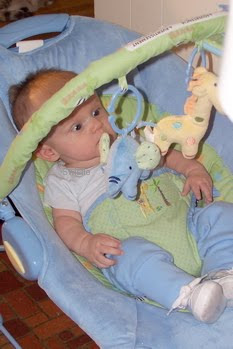
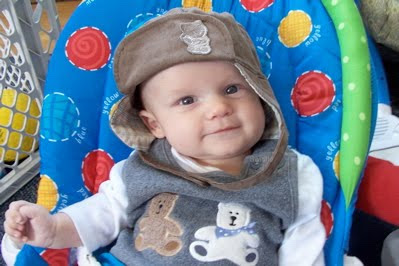
A fun change was how endlessly fascinating we found it to notice the similarities and differences between the two children. This was a game we hadn’t been able to play with just one child. Taking pictures of them together was also surprisingly entertaining, as was dressing them in coordinated outfits. Geez, I know this sounds lame. BUT IT WAS FUN. Really, a very pleasing side effect of two or more.
Another change was how big our older child seemed all of a sudden. It was like he was a baby that morning, and a totally competent walker-talker that afternoon. I felt like the new baby gave me a much greater appreciation for the older child’s skills—things I hadn’t noticed so much before, like how nice it was that he could tell me what was wrong, or point to what he wanted, or be set down anywhere without slumping over like a cute little slug.
And the flip of this was also true: I found I could appreciate my second child’s babyness so much more, because I could see it in contrast to the older child. Instead of feeling like his babyness was practically all used up at 6 weeks (as I did with my firstborn, although to be fair that was in the middle of a hormonal cry fest), I felt like he seemed small and cute endlessly. And I could appreciate the simplicity of his needs: he needed food, or warmth, or a new diaper, or snuggles—he didn’t need a twentieth “Why?” answer, or to have it explained why he couldn’t have my coffee, or to have me to decide how much television he could watch.
Oh dear, I don’t feel like I’m answering your question AT ALL. Perhaps now is a good time to get the comments section going.
Update! Jessica writes:
Hello! A couple of years ago I sent you this question.
I wanted to tell you how incredibly reassuring this post and the subsequent comments were. I sadly ended up losing the pregnancy I was writing about, but got pregnant again a few months later and we had our beautiful second son in May 2012.
I think the biggest lesson I learned is that babies are DIFFERENT. Our first son was a difficult, difficult baby. Everything was hard — feeding, sleeping, awake time, going out, staying in. Therefore, I fully expected our baby experience to be replicated, except also with an older version running around wreaking havoc and demanding attention.
As it turned out, our second is the proverbial “easy baby” and our very difficult toddler has matured into a only moderately difficult preschooler.
Because of my paranoia, we had arranged for a young babysitter to come play with our older son for a couple of hours a day during our baby’s first few weeks, and that made a huge, huge difference, especially as I recovered from a c-section.
But my fretting was mostly unwarranted. Older son LOVES the baby, and we haven’t experienced too many alarming backslides in his behavior. He tries to be too rough with the baby — of course — but that’s pretty easily handled. Our days are intense, but joyful.
So thank you to you and the commenters for helping me through the fretful anticipation period. As is almost always the case, the worry turned out to be much worse than the reality.